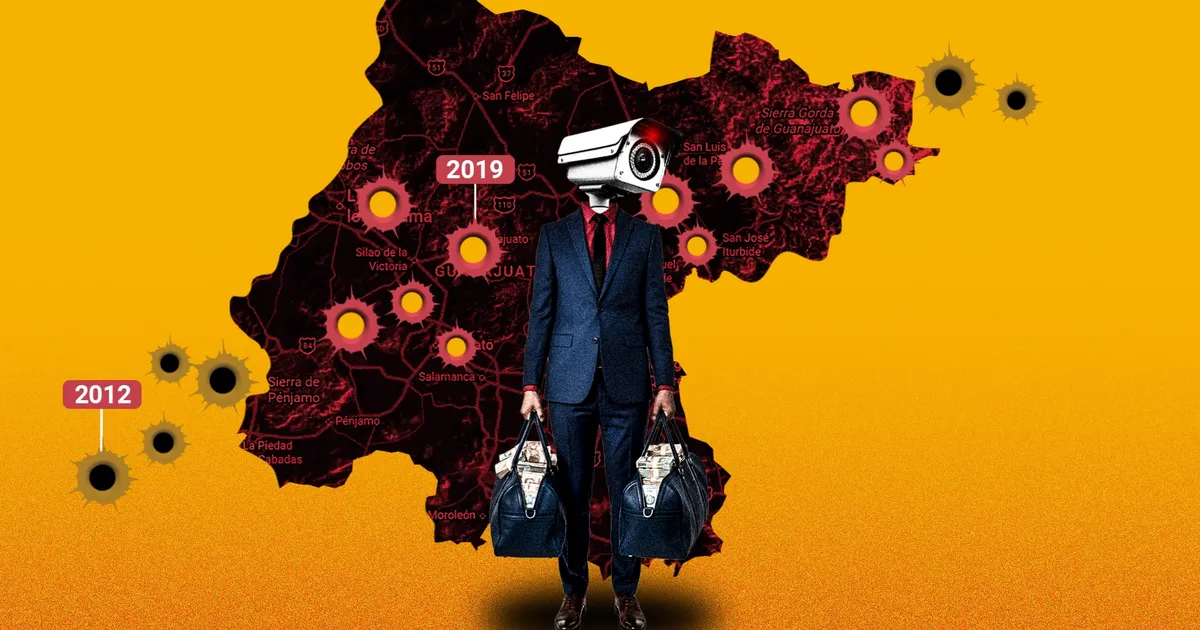
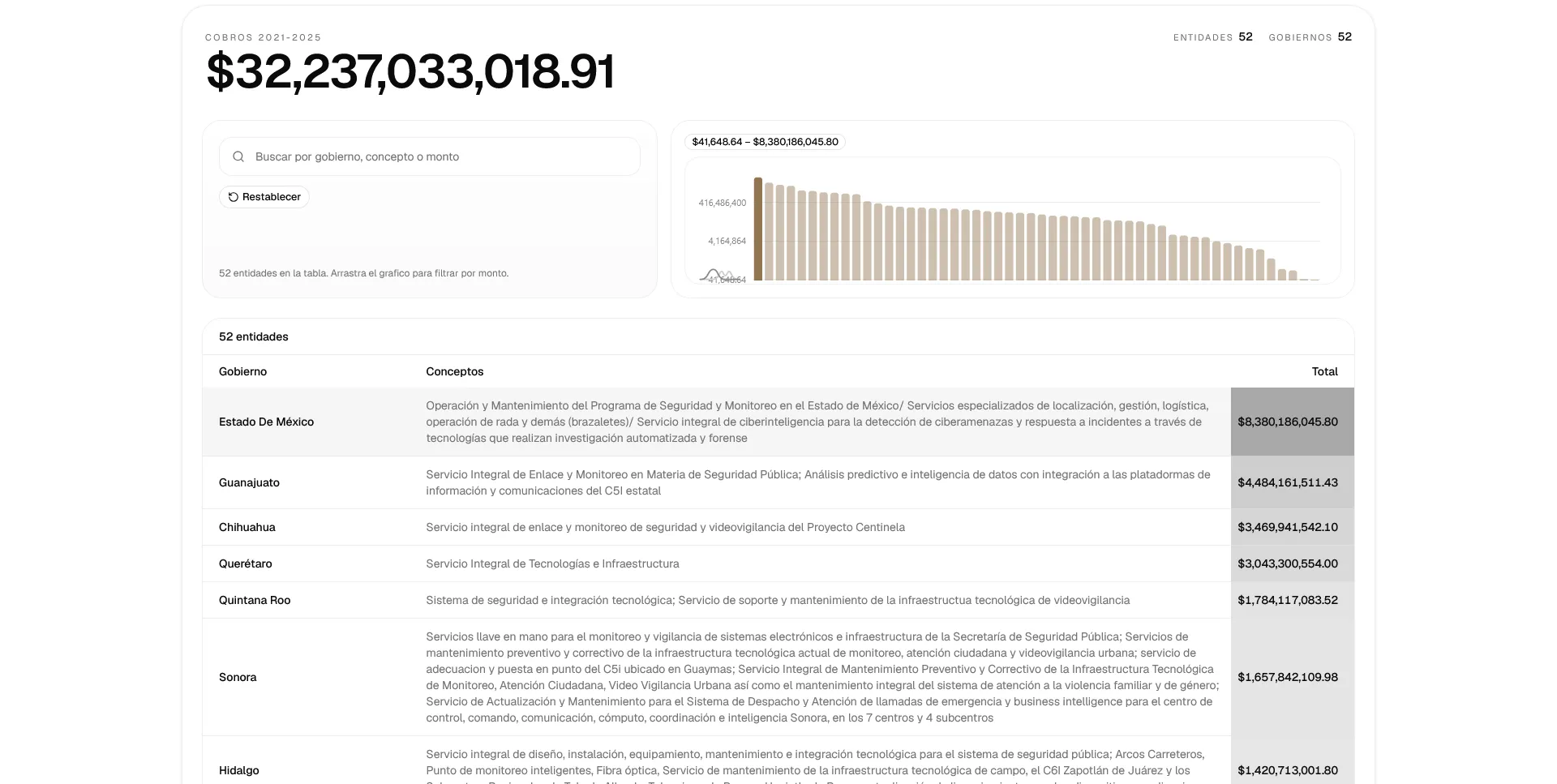
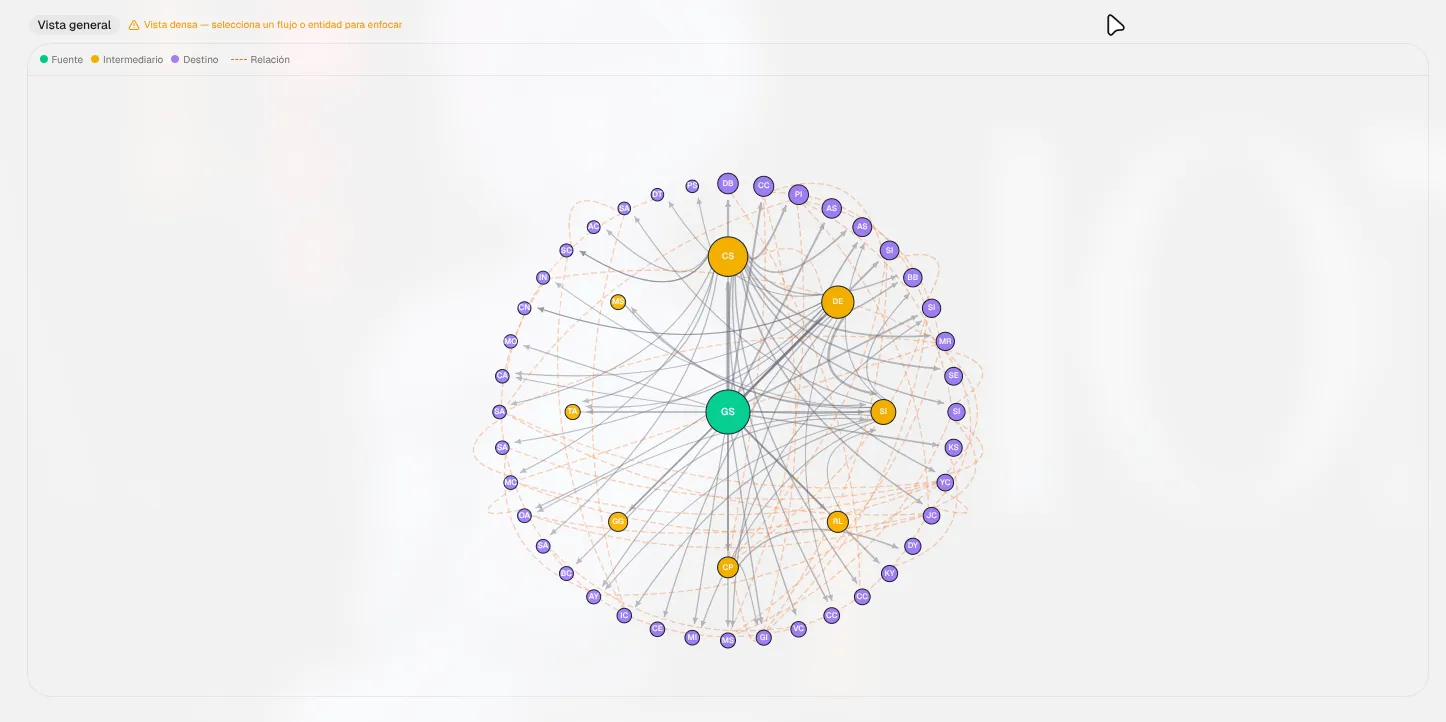
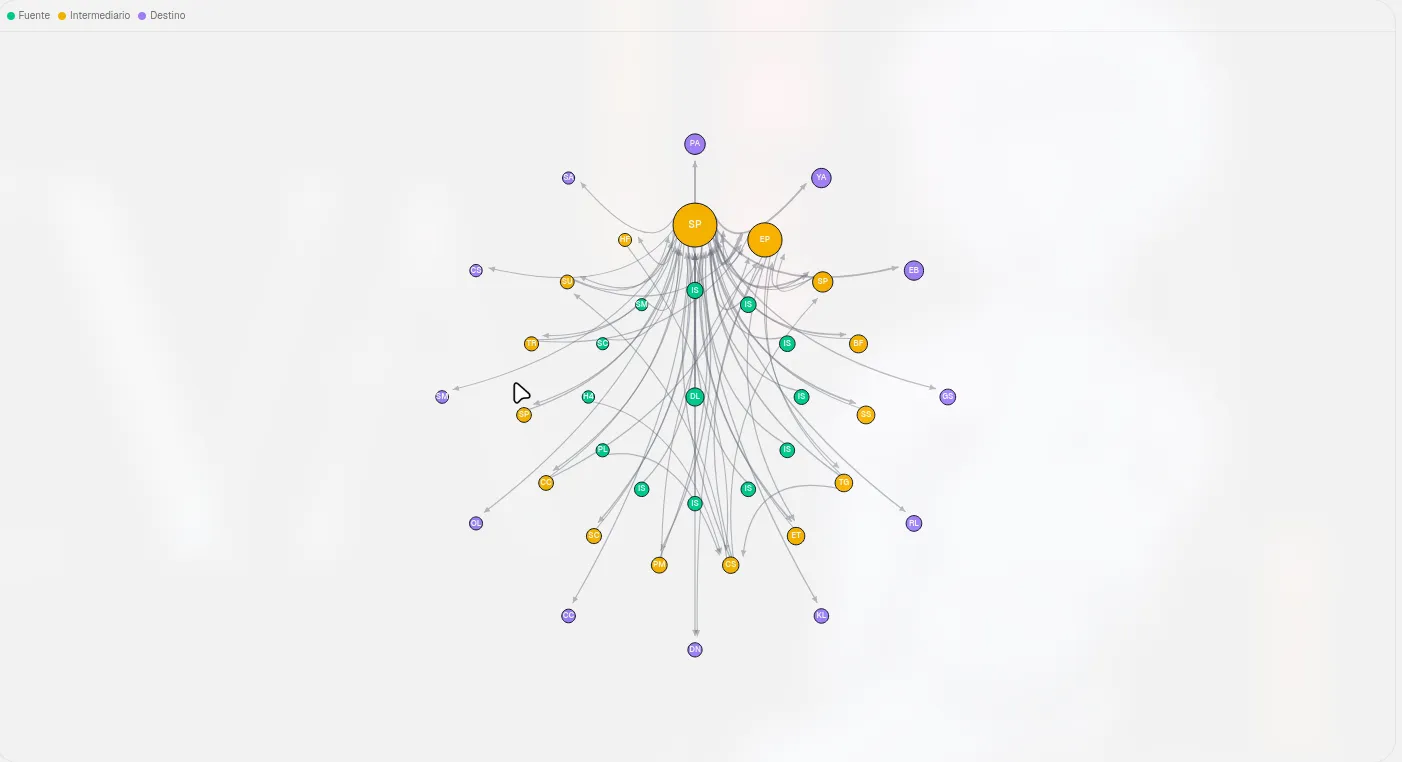
For more than a decade, governments of different parties and ideologies have responded to violence in a similar way: video surveillance. Billions of pesos in public resources funded cameras, drones, and highway arches, deployed on streets, avenues, and highways across the country. The promise was that more technology would mean more security. But the data revealed in these articles shows that the goal has not been achieved.
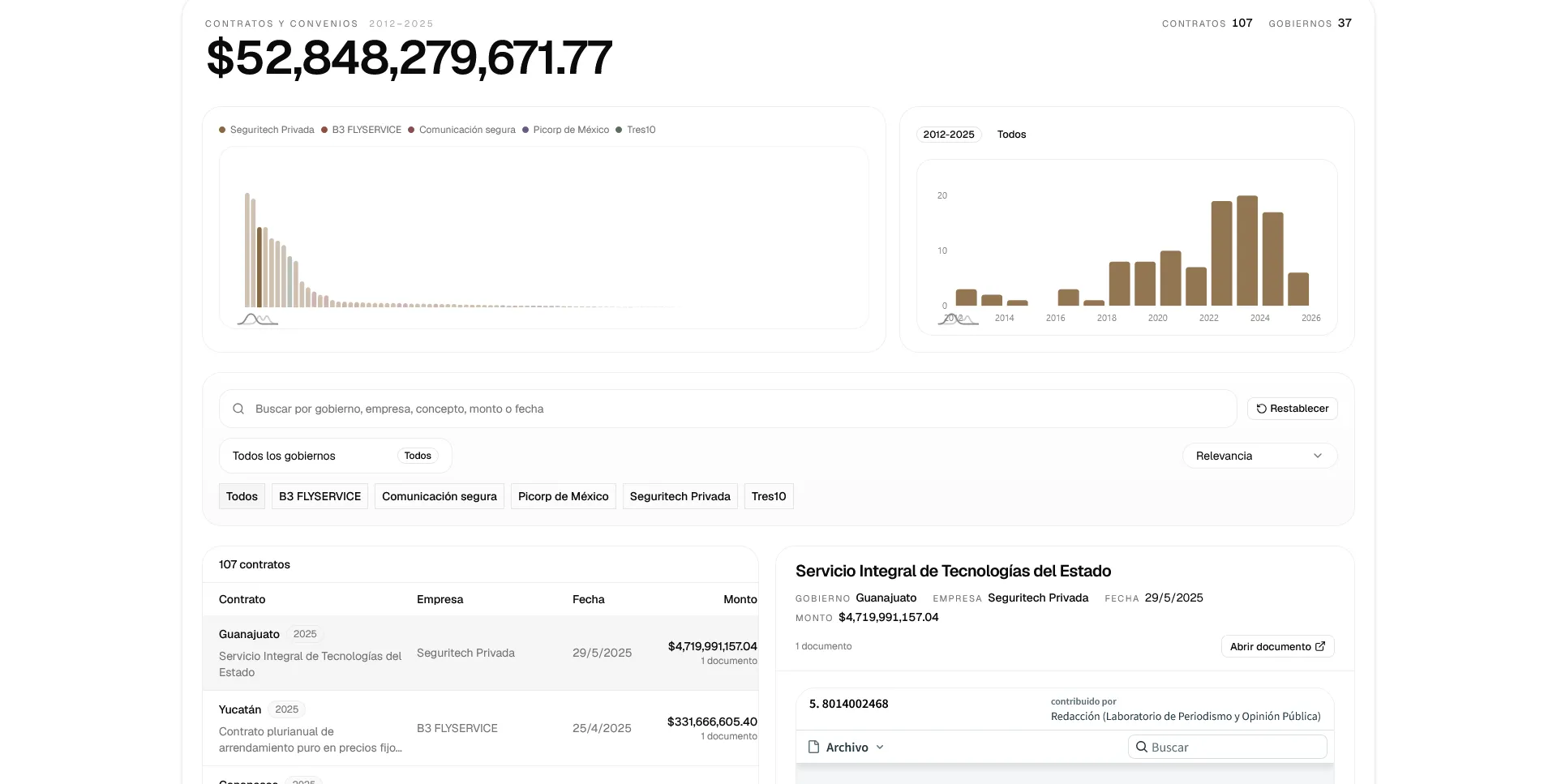
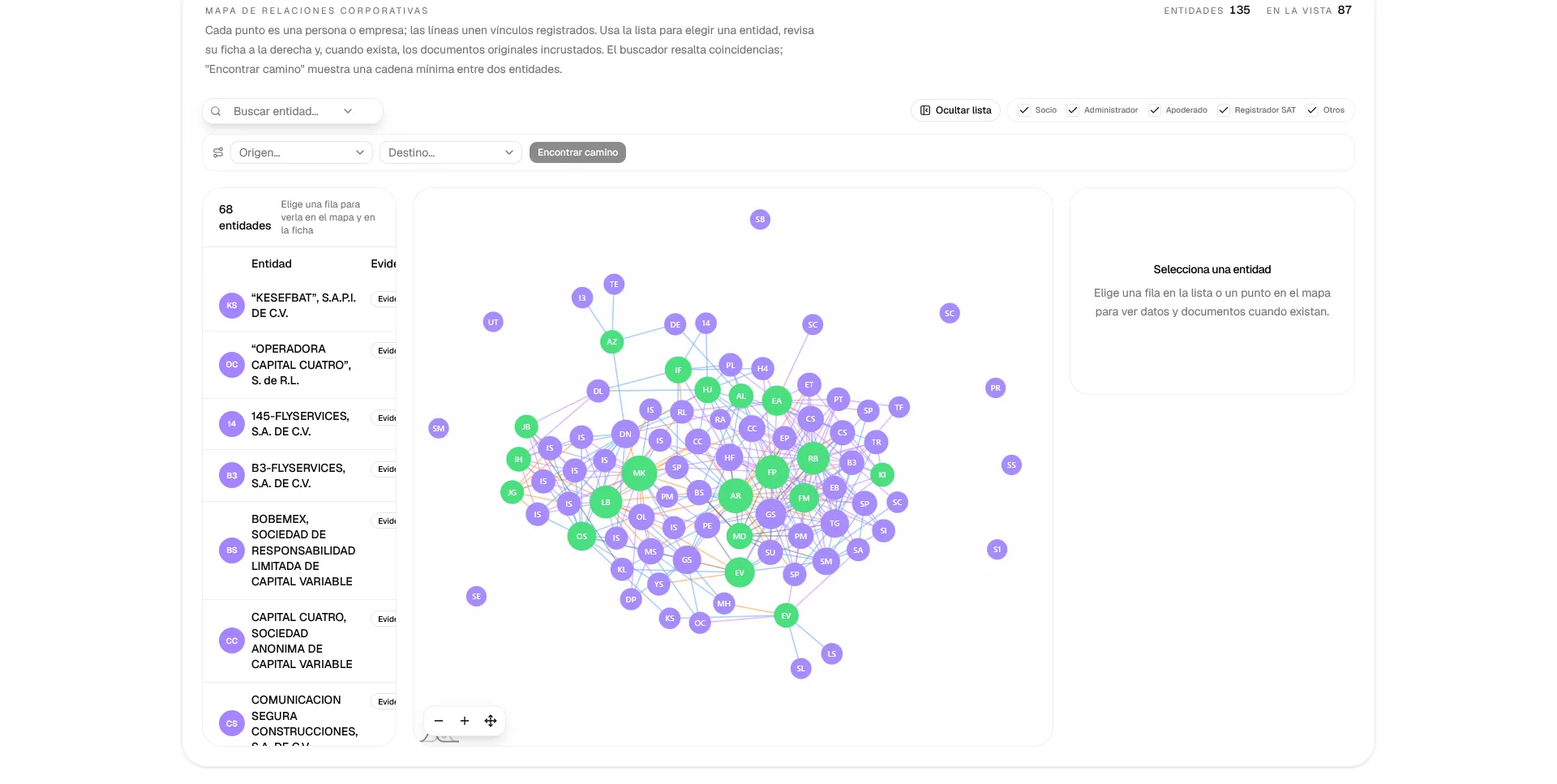
The Profitability of Fear is an investigation by POPLab and CONNECTAS based on the analysis of thousands of tax records, public contracts, corporate filings, and financial documents from Seguritech Privada, the largest provider of security technology to governments in Mexico, which since 2012 has received more than 52 billion pesos (USD 3.007 billion) in contracts with at least 37 state and municipal governments. The documents were received by the journalists through confidential sources and independently verified through freedom of information requests, public records, and cross-referencing with primary sources.
Behind the numbers are people seeking justice: families who waited months for a prosecutor to review recordings that no longer existed, searchers who describe systems that perform well in demonstrations but fail when they are needed, and governments that allocated up to 78% of their security budget to a single provider.
The Profitability of Fear is an investigation into how money earmarked to combat violence is spent, who benefits from it, and why it is so difficult to find out.
For this investigation, Ariel Picker and Daniel Esquenazi were contacted to address specific questions about Seguritech's business model, the company's trajectory, its contracts with state and municipal governments, and its outlook on the technology security sector in Mexico. At Esquenazi's request, written questionnaires were submitted; the company indicated that its lawyers would review the questions and, one day later, that an advisor would handle the responses. The company committed to delivering the information by the evening of Tuesday, June 2. At the time of publication, no response had been received. The company was informed that its position, if provided, would be published in a subsequent article.