By: Kennia Velázquez, Mónica Cerbón and Arnoldo Cuéllar
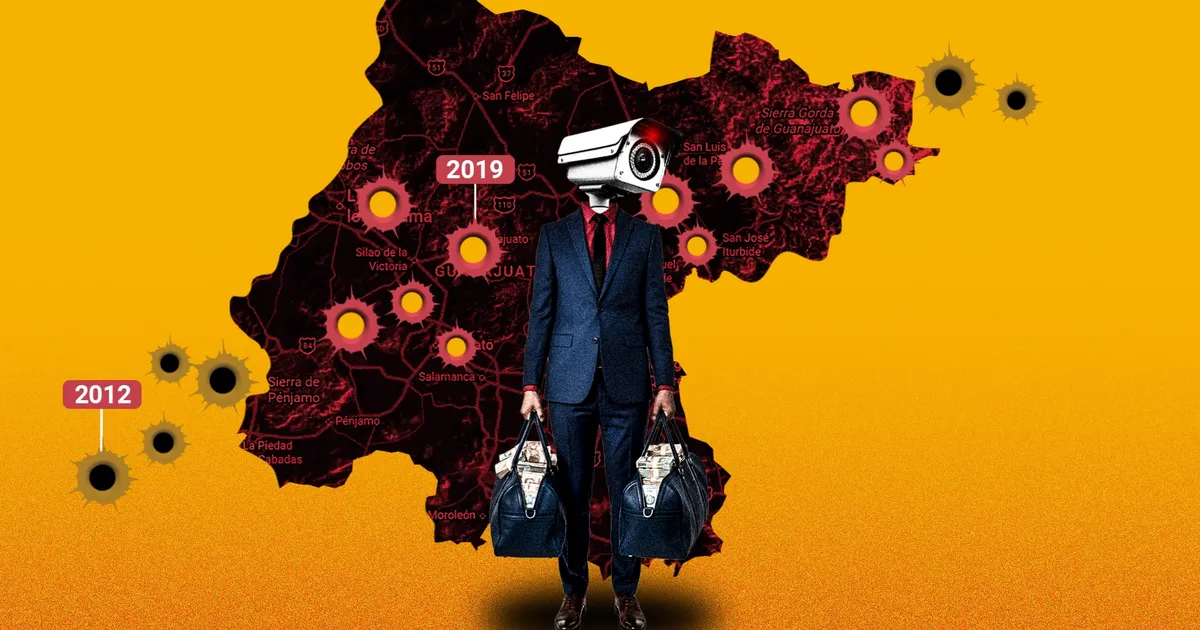
In Mexico, billions of dollars in public funds are allocated each year to measures to contain the rise in crime. At the same time, Seguritech Privada has grown, led by Ariel Zeev Picker Schatz, whose business success is based on sales to the public sector of video surveillance technology for state governments, federal agencies, and municipalities.
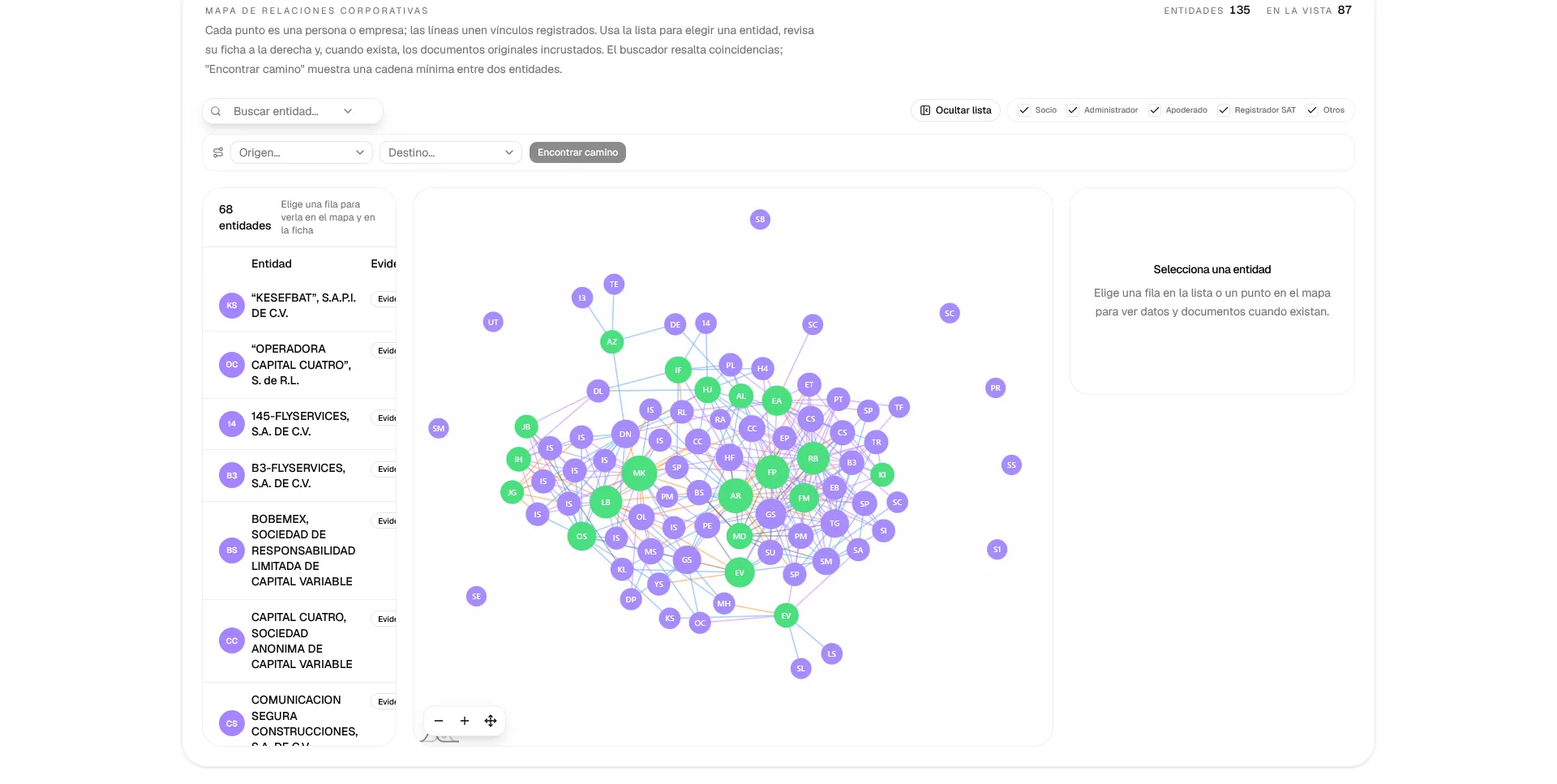
That investment has not improved citizens' sense of security, but it has helped build a network of more than 60 companies, where family members, employees, and collaborators of Picker Schatz act as shareholders, exchanging resources and operations.
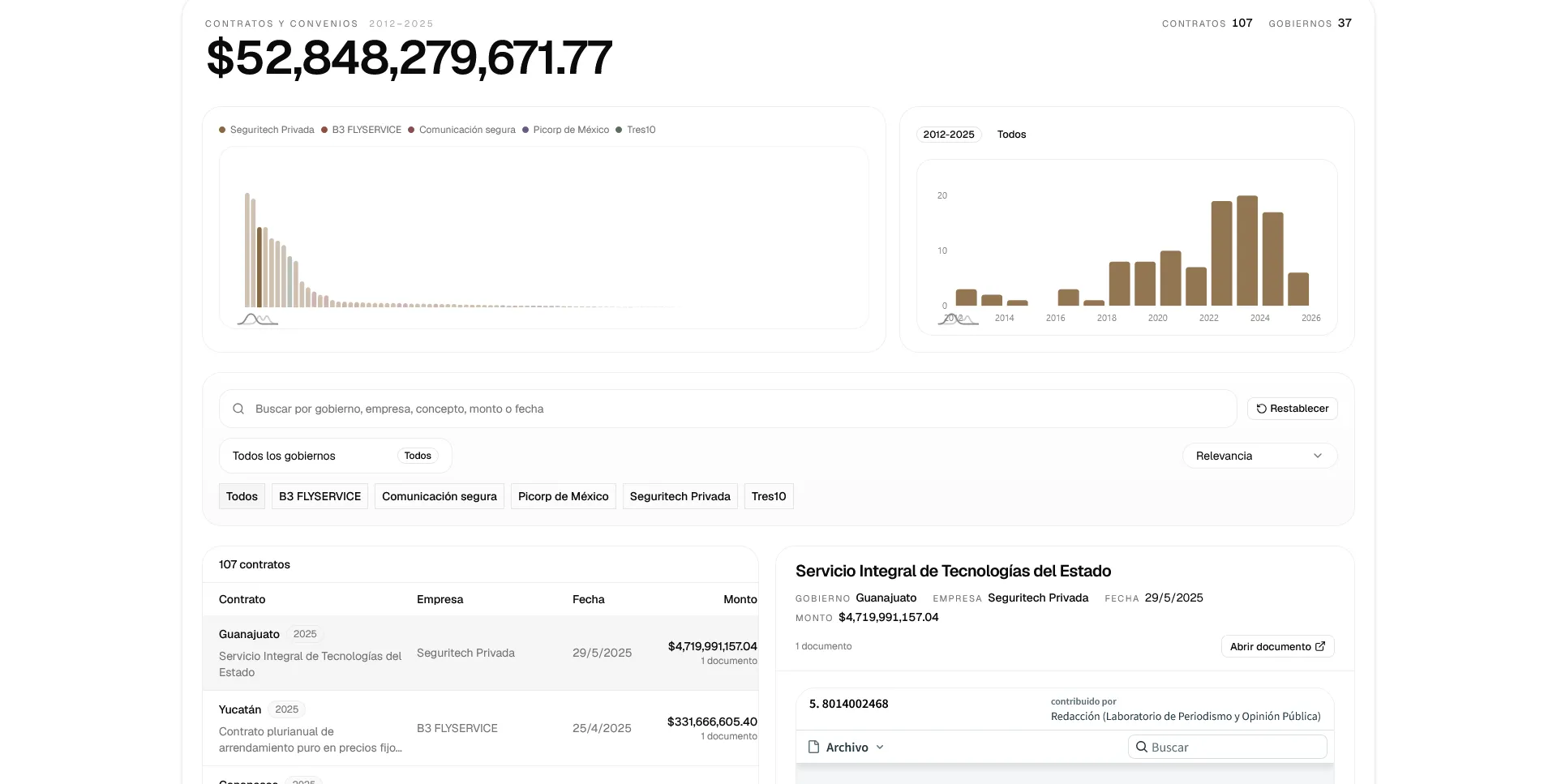
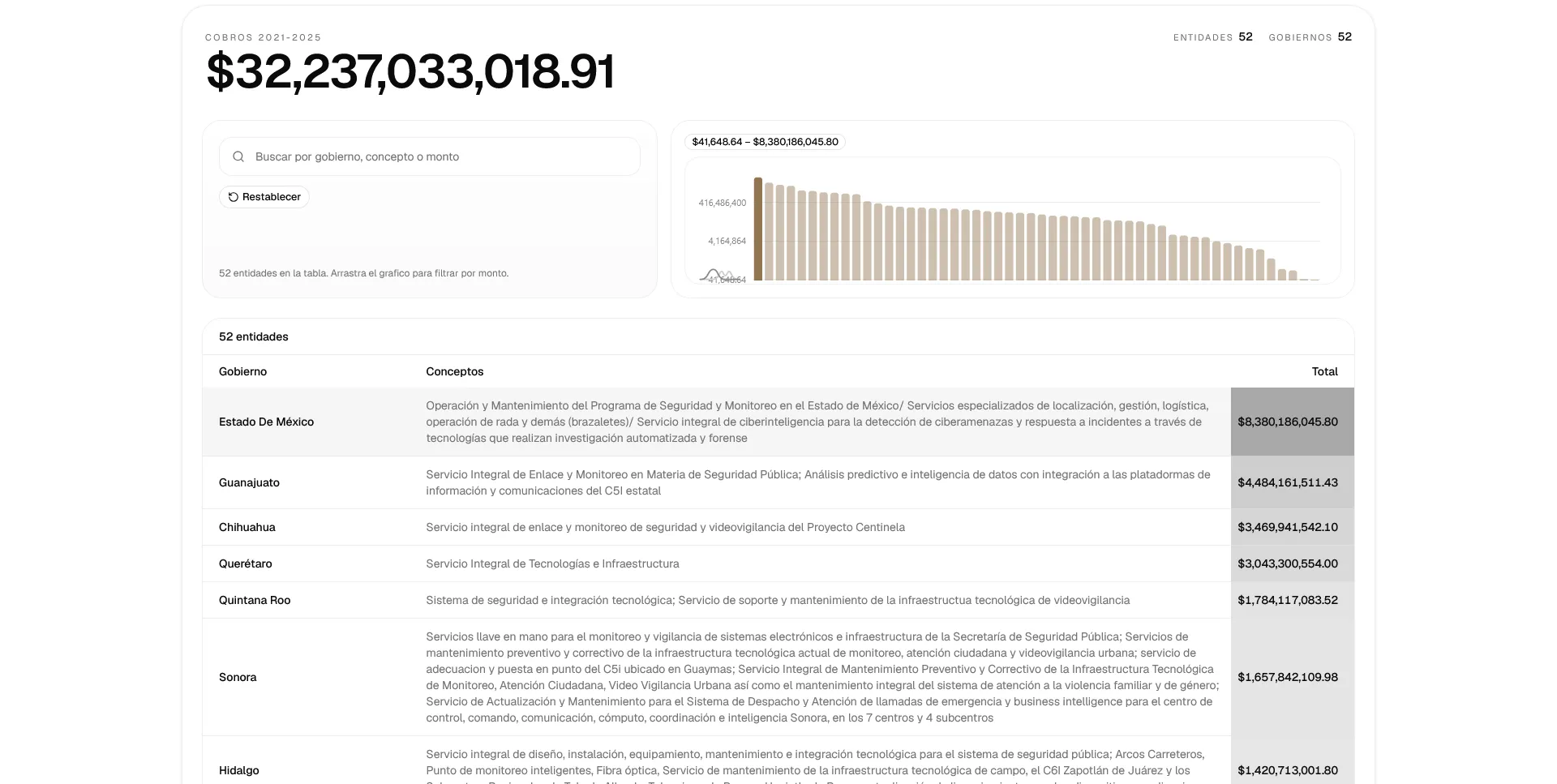
The analysis of financial flows, corporate records, and contracts obtained by POPLab and CONNECTAS found that between 2021 and 2025, Seguritech Privada and Comunicación Segura had revenues of more than 34 billion pesos (USD 1.961 billion), 95% coming from public funds.
A portion of those funds went to individuals and companies hired as intermediaries, for whom no verifiable public track record in the sector could be found in the records consulted. Some of these entities received commissions significantly higher than market rates, resulting in transfers that make it difficult to trace the final beneficiaries and impossible to determine whether the costs of government contracts are proportional to the service received.
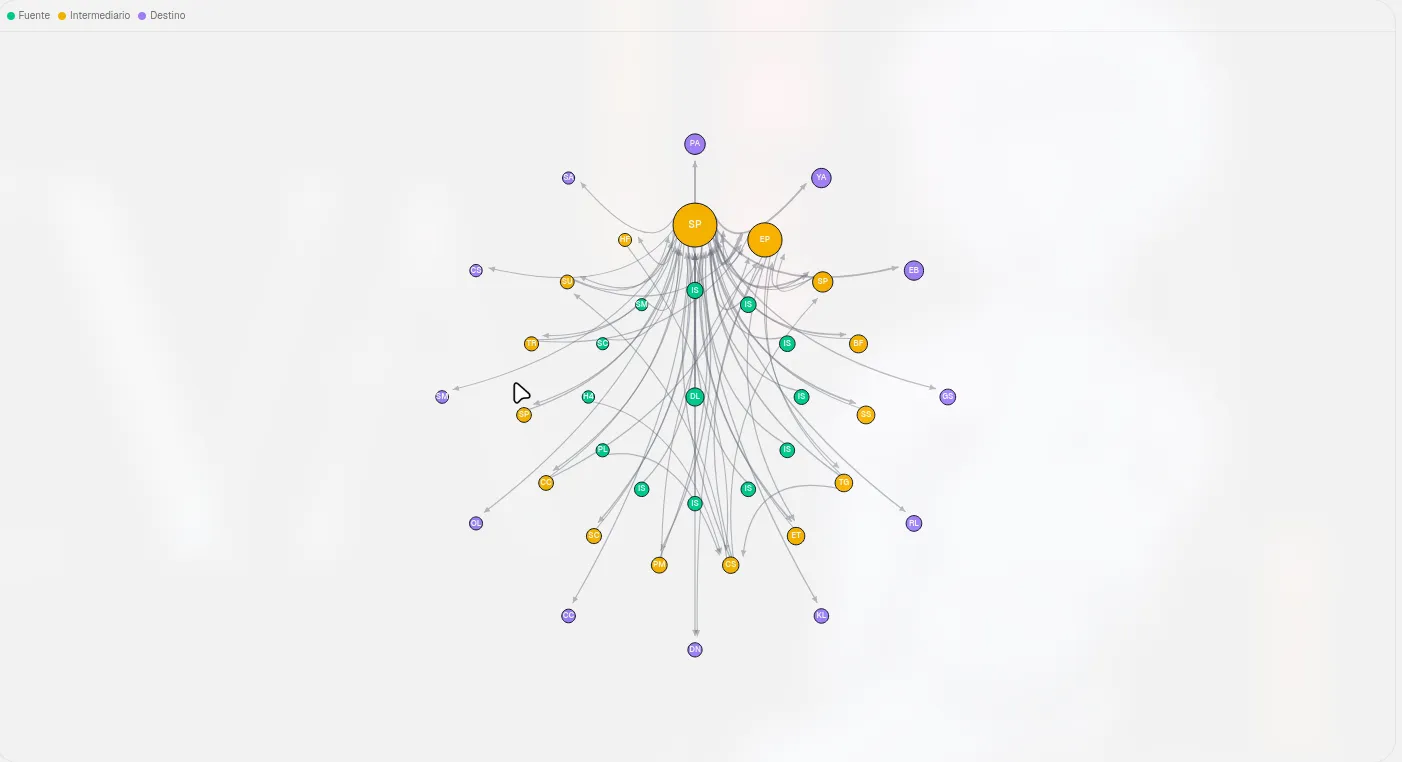
The same financial records show that, between 2021 and 2025, the group allocated more than 2.4 billion pesos (USD 139 million) to cover items such as “project success," "management," "consulting," or "intermediation" for the payment of commissions and consultancy fees related to public contracts.
The largest recipient of commissions is Cadaval Servicios Estrategias y Proyectos, which accumulated 912 million pesos (USD 51 million) for multiple companies within the group, under the concept of “project success commission” labeled with the name of the government contract from which it originated: Chihuahua, State of Mexico, Guanajuato, Querétaro, Quintana Roo, and at least 20 other states and municipalities.
Another prominent commission agent is Daniel Esquenazi, who received more than 680 million pesos (USD 37.5 million) between 2021 and 2022. This is the owner of the house in Houston where the former Guanajuato governor Diego Sinhue Rodríguez Vallejo resided for several months, whose administration hired Seguritech Privada for over 4 billion pesos (USD 225 million).
The flow between sister companies.
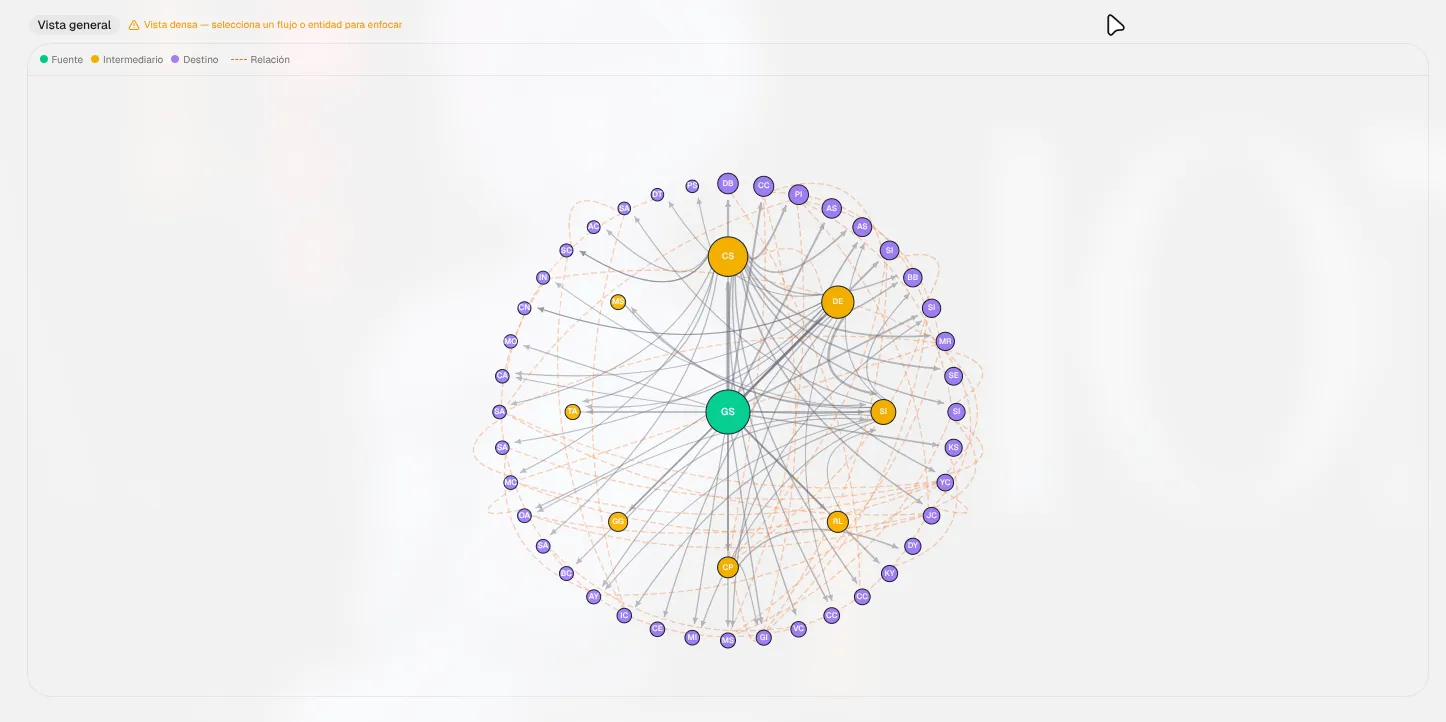
Seguritech Privada functions as the main node for receiving and dispersing resources within the network of companies linked together by common shareholders, including company employers.
During the same years, the company subcontracted 28 sister companies, paying them 12.7 billion pesos (USD 738 million) for services as diverse as the acquisition of screws and gasoline, leases, air taxi services, or consulting on government projects. For example, E Pago.com SA de CV received more than 7.2 billion pesos (USD 415 million), with no public information available regarding its operational capacity.
Within the group’s companies, transfers totaling 15 billion pesos (USD 865 million) over five years: capital that circulates from one company to another and back.
Flows Between Seguritech Group Companies
Internal payment flows between companies around Seguritech
Internal Payments
The table sorts each internal payment by amount. The map shows the full graph by default; select a flow or entity to focus that context.
- Flows
- 65
- On graph
- 65
Largest flow: Seguritech Privada → EPAGO.COM $5,987,184,343
Hubs: Seguritech Privada ($13,102,672,352) · EPAGO.COM ($6,315,623,538) · Pabe-Tax ($917,148,489)
Source: Own analysis based on Grupo Seguritech tax records.
Epago.com, in addition to receiving millions in payments, channels resources to other companies for the execution of works and services. Part of those flows reached companies with tax audit findings, like Proveedores de Servicios Comerciales and de Construcción Naith, included by the tax authority in the list of companies that invoice simulated transactions.
Seguritech Privada allocated 3.5 billion pesos (USD 201 million) to companies belonging to the group to carry out work for governments, some of them also suppliers to the public sector, which raises questions about the controls that authorities have to monitor who accesses security-related information.
Mexican law allows partial subcontracting of services, but it stipulates that authorization from the contracting entities is required. In the agreements analyzed, it was not possible to verify whether these authorizations were granted, since the information has been classified, in whole or in part, under arguments of public safety.
Luis Pérez de Acha, lawyer and former member of the Citizen Participation Committee of the National Anti-Corruption System, explained that distributing a corporation’s operations among multiple companies is a legal and common practice in the business world, since it can have advantages in administrative and fiscal management. However, when fragmentation is combined with intermediaries without a verifiable track record and with funds circulating between related companies, the result is a complex network that hinders traceability and hides who ultimately receives the money.
According to José Flores, from the R3D organization, this type of scheme has been documented for more than a decade in the surveillance industry: “For example, in the Hacking Team email leaks, messages appeared where several intermediary companies agreed to artificially inflate the price."
Flores adds that subcontracting can serve a dual purpose: “It can be a bad practice from many angles, such as outsourcing to yourself to inflate the bill. But it could also be a deliberate design so that there is no clear trace of how this surveillance is being carried out.”
Commissions and services: the business within the business.
Cadval, the company that leads in collecting commissions from Seguritech Privada, with 912 million pesos (USD 52.6 million), did not retain that money: it transferred 874 million pesos (USD 50 million) to another group of 19 companies under the same concepts —”project management” and “success commission”— labelled with the same government contracts of origin. None of those companies has a verifiable public presence as a provider of security or technology services.
Of that total, 376 million pesos (USD 21 million) flowed to five companies linked to the same family, which were established on the same day before the same notary in Gómez Palacio, Durango.
The profile of several companies receiving these payments presents indicators that Pérez de Acha identifies as red flags: sharing of recurring structural features —same attorneys, legal representatives, or notaries in different companies; companies incorporated on the same day by the same notary— and such board corporate purposes that they build airports and sell helicopters (whose registered partners have no documented background in the security and technology sector) as well as selling clothing and footwear, or they sell groceries, lubricating oils, and architectural supplies, among other things.
Commission Flow
Money flows between entities related to Seguritech
Commission Flows
The table sorts each movement by amount. The map shows the full graph by default; select a flow or entity to focus that context.
- Flows
- 69
- On graph
- 69
Largest flow: Grupo Seguritech Privada → Cadval Servicios, Estrategias y Proyectos $912,877,885
Hubs: Grupo Seguritech Privada ($2,436,442,433) · Cadval Servicios, Estrategias y Proyectos ($1,803,024,063) · DANIEL ESQUENAZI BERAHA S.C. ($974,796,986)
Source: Own analysis based on Grupo Seguritech tax records.
Vozh Consultoria Administrativa y Humana S.C. was included in the list, having received 27 million 394 thousand pesos (USD 1.5 million) from Cadval under concepts such as “contract intermediation” and “success commission” in nine states: Queretaro, the State of Mexico, Guanajuato, Zacatecas, and Oaxaca. The company is included in the final global list of taxpayers with simulated transactions.
The pattern is repeated in the case of Esquenazi, as his company transferred nearly half of the commissions received to Servicios Integrales TRMG, whose tax certificate was revoked by the Tax Administration Service (SAT in Spanish), which prevents it from issuing invoices.
In 2022, a law firm in Florida tried to remove news articles from the outlet Semanario Zeta de Tijuana in which they identified Daniel Esquenazi Beraha as an executive of Seguritech Privada, arguing that he had no relationship with the company. That same year, their client received more than 600 million pesos in commissions from various companies within the conglomerate.
Years later, former governor Diego Sinhue Rodríguez Vallejo was exonerated of conflict of interest after living in a house in Texas owned by Esquenazi, by the government of his successor Libia Dennise García, on the grounds that the businessman “does not appear as representative or shareholder” of Seguritech.
Industry experts indicate that conventional commissions are usually below 3 percent. In 23 out of 45 payments made by governments, commissions ranged from 4 to 50 percent, well above the conventional range for the sector.
The anti-corruption activist, Luis Pérez de Acha, suggests that, in some cases, the layered outsourcing scheme may be associated with the need to fragment money flows: “There is no reason to pay commissions above 10%, which are already out of line with the market.”
A breakdown by state reveals the magnitude of this scheme. Commissions paid by the company for contracts with the State of Mexico generated the highest amounts, followed by Guanajuato, Querétaro, and Chihuahua, which together total more than 845 million pesos (USD 47 million) for this concept. Other commission payments exceeding one billion pesos could not be linked to a specific public contract, which prevented tracing the origin of these resources.
According to Pérez de Acha, the elements identified in this investigation constitute warning signs recognized by the SAT itself for decades: Very broad corporate purposes, with no public traces, and back-and-forth flows between related companies are risk criteria. However, he cautions that reaching a definitive conclusion is beyond the scope of any external investigation: “These blind spots can only be broken by the authorities with the classified information they have in their possession.”
Commercial records show another pattern in several of these companies that receive commissions: the founding partners —in some cases, people without documented business experience, residing in rural or highly marginalized areas— transfer their shares or cease to be part of the formal structure shortly after incorporation. Instead, a small group of people repeatedly appear as proxies, sole administrators, or legal representatives in different companies within the network. The tax records show that several of the companies that receive payments from Cadval and Esquenazi, in turn, make transfers among themselves, generating a third layer of resource circulation.
Another company that is contracted by Seguritech Privada is ANEP Serviciospro; it received more than 114 million pesos (USD 6.5 million) between 2019 and 2025 for consulting, collections, and project management in seven states. It also lacks a website, social media presence, and visible registration on public procurement platforms. Some of its expenses include the spelling review of a company strategic plan, for which it paid 2.8 million pesos (USD 161 thousand), and administrative tasks in Colombia, where the group also operates. Records also show that one of Picker’s employees is listed as a special delegate in ANEP’s shareholders’ meeting minutes.
For this investigation, attempts were made to ANEP Serviciospro, Servicios Integrales TRMG, Proveedores de Servicios Comerciales y de Construcción Naith, Cadaval Servicios Estrategias y Proyectos, and Vozh Consultoría Administrativa y Humana S.C., in order to understand their position. However, none of these companies have a website, telephone number, email, physical address, or any other means of reference in public records.
According to Rafael Prieto Curiel, former director of strategic analysis at the Mexico City Emergency Response Center, the acquisition of this type of technology has become a political and economic incentive: “Are they the missing piece needed to create security? I don’t think so. Is it conducive to them doing business? Yes.”
Bernardo León, former Security Secretary of Morelia, states that technology “is a means, not an end." However, he warns that, in contexts with low transparency and a lack of democratic controls, doubts may arise about its use and the potential benefits associated with its purchase: “And if someone benefits, let’s say, outside the law, and if that lacks the transparency it should have because it’s a security issue, that’s where we’d have to look.”
The model described is not exclusive to Seguritech, but its scale makes it an exceptional case. The mechanisms —internal subcontracting, cross-transfers, and commissions on government contracts— are legal. That’s why public scrutiny is focused on the bottom line: taxpayer money earmarked for combating violence that is not yielding results, managed with a system of intermediation that, by multiplying levels between the public contract and the final service, makes it impossible to determine whether the treasury paid a fair price for what it received.
How the surveillance empire grew.
Seguritech Privada was founded in 1995 as a real estate company that later began marketing neighborhood alarm systems. It was started by Simón Picker Gottlieb, father of Ariel Picker Schatz. In 2009, three years after the start of the federal strategy against organized crime, the company incorporated security services for public and private institutions. In the following years, it expanded its operations into industrial safety, specialized training, and technical support for Command and Control Centers (C5), platforms that centralize surveillance cameras, emergency calls, and police databases in different states across the country.
For this investigation, at least 63 companies created between 1995 and 2024 by the Picker Schatz family and close associates were identified. Only 29 of them are part of the Seguritech Integral Security Corporation. The rest corresponds to companies with diverse business activities —telecommunications, air services, real estate, tourism, and agricultural projects, such as the Omún vineyard in Guanajuato— in which Ariel Picker, his mother Olga Schatz, the businessman Daniel Esquenazi, and other collaborators of the group are listed.
Also included are companies designed to participate in public-private partnership contracts in Michoacán and Tamaulipas. In May of this year, it was announced that they would build and operate a C5i in Medellin, Colombia. There are also records of activities in five other Latin American countries and Spain.
The company’s growth has not been without controversy. Since at least 2015, press reports have documented questions about contracts awarded to the group, including opaque bidding processes, failures in equipment delivery, and service failures.
In some cases, authorities have initiated administrative proceedings against the company. The Army Bank imposed a fine of 3.2 million pesos (USD 181 thousand), while the Coahuila government sanctioned the company with 1.9 million pesos (USD 107 thousand). This year in Chihuahua, state authorities determined claims totaling 112.3 million pesos related to contract delays.
---
For this investigation, Ariel Picker and Daniel Esquenazi were contacted to address specific questions about Seguritech's business model, the company's trajectory, its contracts with state and municipal governments, and its outlook on the technology security sector in Mexico.
At Esquenazi's request, written questionnaires were submitted; the company indicated that its lawyers would review the questions and, one day later, that an advisor would handle the responses. The company committed to delivering the information by the evening of Tuesday, June 2. At the time of publication, no response had been received. The company was informed that its position, if provided, would be published in a subsequent article.